
P2080 Code: What It Is, Symptoms, Causes & How to Fix It with iCarsoft CR Eagle
If your check engine light just popped on and your OBD-II scanner reads P2080, don’t panic—but don’t ignore it either. This common diagnostic trouble code (DTC) points to issues with your exhaust gas temperature (EGT) sensor, a critical component for your vehicle’s emission control and engine performance. In this guide, we’ll break down everything you need to know about the P2080 code, from its meaning and symptoms to the best tool for diagnosing and clearing it: the iCarsoft CR Eagle OBD2 Scanner.
What Exactly Is the P2080 Code?
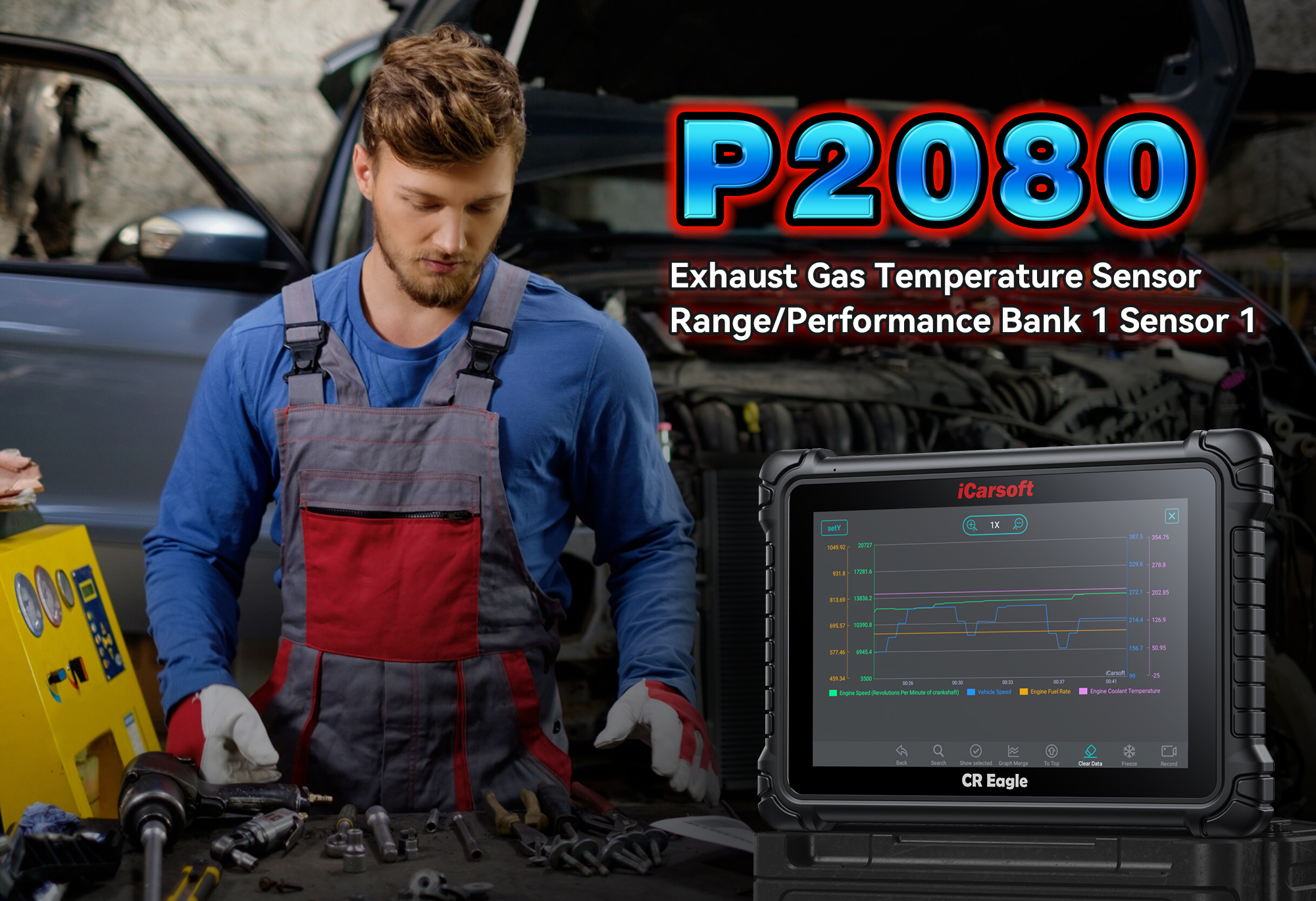
The P2080 code is a generic powertrain DTC that stands for Exhaust Gas Temperature Sensor Circuit Range/Performance (Bank 1, Sensor 1). It triggers when your vehicle’s Engine Control Module (ECM) or Powertrain Control Module (PCM) detects an implausible signal from the EGT sensor located in Bank 1 (the engine bank containing cylinder #1) and Sensor 1 (the upstream sensor before the catalytic converter or diesel particulate filter/DPF).
This EGT sensor monitors exhaust gas temperatures to help the ECM adjust ignition timing, air-fuel ratio, and emission control systems (like SCR and DPF). A faulty signal can disrupt these adjustments, leading to performance issues and increased emissions.
Common Symptoms of the P2080 Code
Not all vehicles show obvious symptoms when P2080 appears, but watch for these red flags:
- Illuminated check engine light (MIL)
- Decreased engine power and acceleration
- Poor fuel economy
- Rough idling or engine misfires
- Increased exhaust emissions
- Potential overheating in turbocharged engines
What Causes the P2080 Code?
Diagnosing P2080 starts with identifying its root cause. Common triggers include:
- Faulty EGT Sensor: The most common cause—wear and tear or exposure to extreme exhaust heat damages the sensor.
- Wiring Issues: Damaged, corroded, or loose wiring/connectors between the EGT sensor and ECM.
- ECM/PCM Malfunction: Rare, but a faulty module may misinterpret sensor signals.
- Exhaust Leaks: Leaks near the sensor can cause inaccurate temperature readings.
- Aftermarket Modifications: Illegal catalytic converter removal can disrupt sensor function.
Why the iCarsoft CR Eagle Is Perfect for P2080 Diagnostics
To fix P2080, you need a reliable scanner that can read, clear, and diagnose the code—plus provide actionable data. The iCarsoft CR Eagle stands out as a professional-grade tool for both DIYers and small workshops, with features tailored to P2080 troubleshooting:
Works with 99% of passenger cars and light trucks (1996+) from Europe, Asia, and America—including P2080-prone brands like Volkswagen, Jeep, Ford, and Audi.
Reads not just P2080 but related codes (P0544, P2081, P2082) and provides detailed freeze frame data to pinpoint when the fault occurred.
Monitors real-time EGT sensor values (4-in-1 graph mode) to test if the sensor is functioning within range.
Safely erases P2080 after repairs and verifies if the fault recurs during test drives.
Includes DPF regeneration (critical for diesel vehicles with EGT sensors) and sensor calibration—extra value for P2080 fixes.
Bluetooth/Wi-Fi VCI (20m range) lets you diagnose without being tethered to the OBD port.
How to Diagnose & Clear P2080 with iCarsoft CR Eagle
Follow these simple steps to tackle P2080 like a pro:
- Plug the CR Eagle’s VCI dongle into your vehicle’s OBD-II port and connect via Bluetooth/Wi-Fi.
- Launch the scanner, select your vehicle make/model, and run an Auto Scan to detect P2080 and related codes.
- Check the Live Data tab to monitor EGT sensor voltage/resistance—compare to specs (150 ohms for a healthy sensor).
- Inspect wiring/connectors for damage (use the scanner’s freeze frame to cross-reference driving conditions).
- Repair/replace the faulty EGT sensor, wiring, or connectors as needed.
- Use the CR Eagle’s Quick Erase function to clear P2080, then take a test drive and rescan to confirm the fault is resolved.
FAQs About the P2080 Code
It’s moderately serious. While it won’t disable your vehicle immediately, it can reduce fuel economy and damage emission systems over time. Address it within 1-2 weeks.
Short trips are safe, but avoid long drives or heavy loads—this increases strain on the engine and emission components.
Costs range from $100 (DIY sensor replacement) to $600 (dealer labor + ECM repairs).
Rarely—intermittent faults may temporarily clear, but the code will return until the root cause is fixed.
Yes—it’s compatible with 10,000+ models (OBD-I/OBD-II) from Europe, Asia, and America, including diesel and turbocharged engines.
Absolutely—its live data function displays sensor resistance/voltage, so you can verify if it’s within the normal range.
Yes—related codes include P0544 (EGT circuit), P2081 (intermittent signal), and P2082 (Bank 2 Sensor 1).
No—DIYers can diagnose and fix it with the iCarsoft CR Eagle, basic tools, and mechanical know-how. Seek a mechanic if wiring/ECM issues are suspected.
Final Thoughts: Don’t Let P2080 Linger
The P2080 code is a warning sign your EGT sensor or emission system needs attention. Ignoring it leads to costly repairs and poor performance. The iCarsoft CR Eagle simplifies diagnosis and clearance, making it the top choice for both DIYers and professionals. Invest in this tool to save time, money, and frustration—your vehicle (and wallet) will thank you.
Disclaimer: This guide is for informational purposes only. Always consult your vehicle’s owner’s manual or a certified mechanic before major repairs. iCarsoft is not responsible for damage from improper tool use.