
If your check engine light just popped on, and a quick scan shows the P0100 code, you’re not alone. This common diagnostic trouble code (DTC) points to a issue with your vehicle’s Mass Air Flow (MAF) sensor circuit—a critical component for engine performance and emissions control. Let’s break down what P0100 means, why it happens, and how to fix it, plus how the right tools can simplify the process.
What Is the P0100 Code?
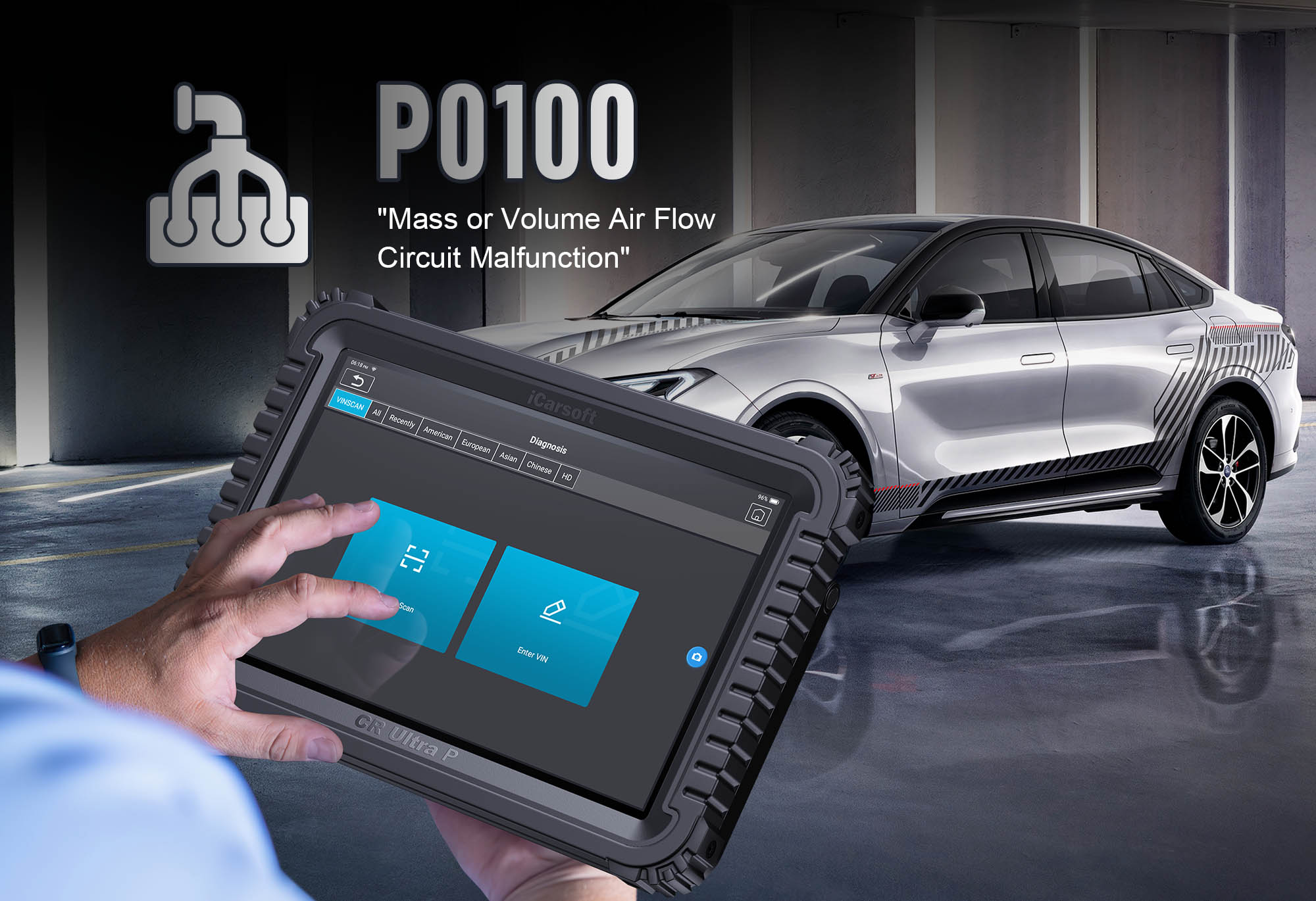
The P0100 code indicates a Mass Air Flow (MAF) Circuit Malfunction. It signals that your vehicle’s Engine Control Module (ECM) is receiving irregular or no data from the MAF sensor, which measures the amount of air entering the engine. This disrupts the ECM’s ability to calculate the optimal air-fuel mixture, leading to performance issues over time.
P0100 is a generic powertrain code, meaning it applies to all vehicles with a MAF sensor, though diagnostic nuances may vary by manufacturer. In our experience, European makes like Volkswagen, BMW, and Mercedes-Benz are particularly prone to this code, especially in high-mileage vehicles (100,000–150,000 km).
Why Does P0100 Happen? Common Causes
Several issues can trigger the P0100 code. Here are the most frequent culprits:
- Dirty or faulty MAF sensor: Dust, oil, or debris can clog the sensor, skewing its readings. VW Group models often resolve with cleaning, while BMW/Mercedes may need replacement.
- Wiring problems: Corroded connectors, short circuits, or loose wires disrupt signal transmission between the MAF sensor and ECM.
- Vacuum leaks: Unmetered air entering the engine bypasses the MAF sensor, causing incorrect readings.
- Clogged air filter: A dirty filter restricts airflow, forcing the MAF sensor to work harder and misreport data.
- Aftermarket intake systems: Uncalibrated modifications alter airflow patterns, confusing the stock MAF sensor.
- Rarely, ECM malfunction: Faulty software or hardware in the engine control module can misinterpret signals.
How Urgent Is P0100?
While P0100 isn’t an immediate safety risk, delaying repairs can lead to:
- Reduced fuel efficiency (higher gas costs)
- Potential engine damage from incorrect air-fuel mixtures
- Increased emissions (risk of failing emissions tests)
We recommend addressing it within 1–2 weeks of the code appearing.
Diagnosing P0100: Step-by-Step Guide
Accurate diagnosis is key to fixing P0100. Here’s how to approach it:
-
Confirm the code
Use an OBD-II scanner to verify P0100 is present. Tools like the iCarsoft CR Ultra P simplify this step with fast, accurate readings across most makes/models.
-
Inspect the air filter
Check for dirt or clogs—replace if dirty (every 15,000–30,000 miles is ideal).
-
Check MAF connections
Look for corrosion, bent pins, or loose plugs on the sensor and wiring harness.
-
Test wiring
Use a multimeter to check for shorts, open circuits, or voltage irregularities between the MAF and ECM.
-
Check for vacuum leaks
A smoke test can reveal leaks in hoses, gaskets, or the intake manifold.
-
Test the MAF sensor
Measure output voltage with a multimeter to confirm it’s functioning within manufacturer specs.
Fixing P0100: Solutions That Work
Depending on the cause, these fixes will resolve P0100:
- Clean the MAF sensor: Use a specialized MAF cleaner (avoid touching sensor elements) to remove debris—effective for VWs and minor clogs.
- Replace the MAF sensor: Necessary for faulty sensors, especially in BMW/Mercedes models. Costs range from $50–$400.
- Repair wiring/connectors: Fix corrosion, splice damaged wires, or replace faulty connectors.
- Fix vacuum leaks: Seal cracks in hoses or replace worn gaskets.
- Replace the air filter: A cheap fix ($15–$50) that prevents future issues.
- ECM reflash or replacement: Rare, but may be needed if all other fixes fail.
Preventing P0100: Maintenance Tips
Avoid future P0100 codes with these habits:
- Replace air filters every 15,000–30,000 miles (24,000–48,000 km).
- Inspect the intake system periodically for leaks or damage.
- Use high-quality fuel to reduce engine deposits.
- Skip aftermarket intake modifications unless professionally tuned for your MAF sensor.
Diagnose P0100 Easily with iCarsoft CR Ultra P
When tackling P0100, a reliable scanner makes all the difference. The iCarsoft CR Ultra P is designed for both DIYers and pros, with:
Quickly reads and clears P0100 and related codes (P0101, P0102, P0171) with detailed explanations.
Works with 1000+ vehicle models, including European, Asian, and domestic makes prone to MAF issues.
Intuitive menus guide you through diagnosis, even if you're not a professional mechanic.
FAQs About P0100 Code
Final Thoughts
The P0100 code signifies a malfunction in the MAF sensor circuit, which can adversely affect engine performance and fuel efficiency. By understanding the common causes and following a systematic diagnostic approach, you can effectively address this issue. Utilizing tools like the iCarsoft CR Ultra P can simplify the diagnostic process and aid in accurate repairs. Always consult with a professional technician if you're uncertain about performing these diagnostics yourself.