
Understanding OBD-II Code P0103: Causes, Diagnosis & Fixes
What Is P0103?
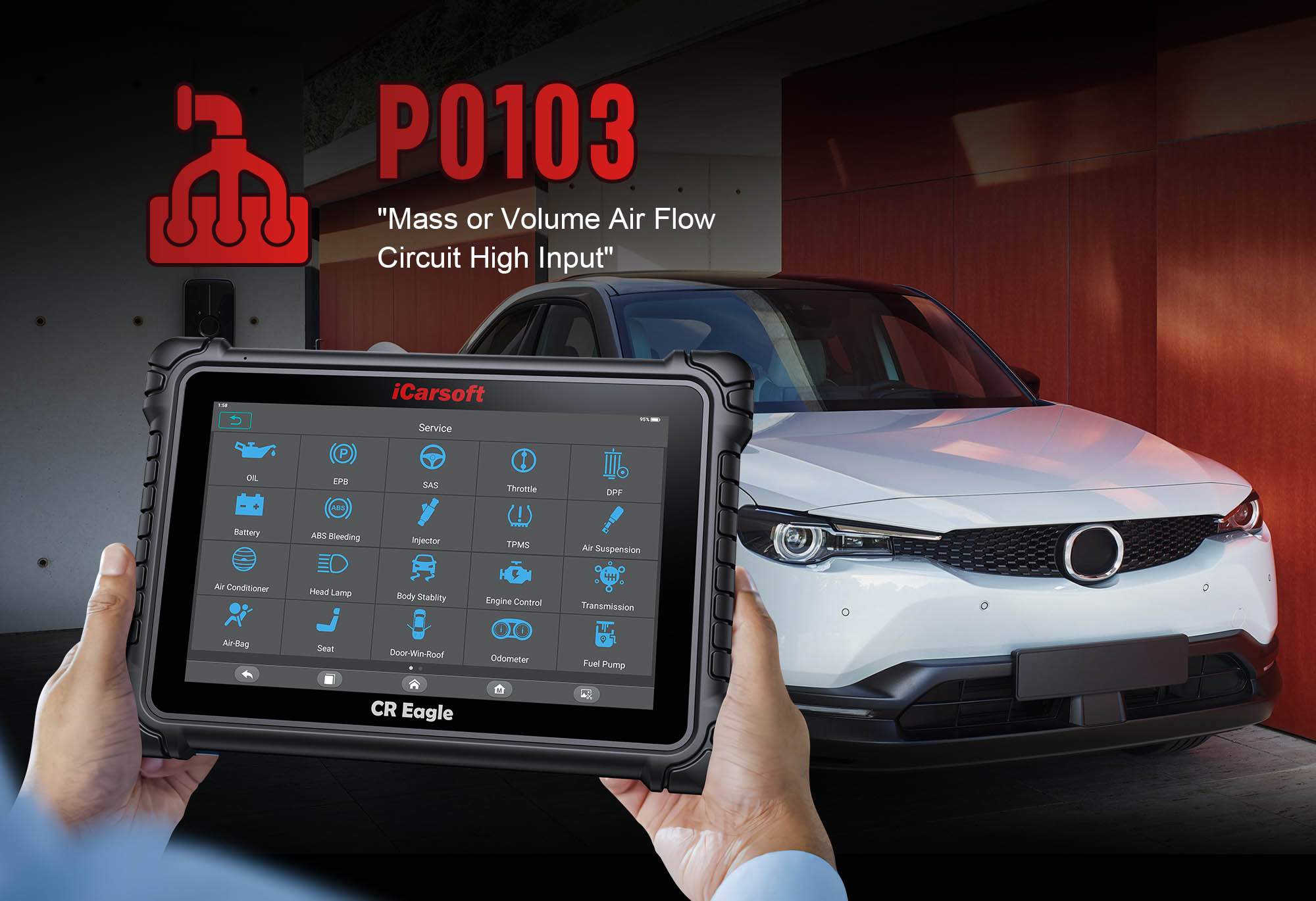
OBD-II trouble code P0103 – Mass Air Flow (MAF) Circuit High Input signals that the engine control unit (ECU) is detecting abnormally high voltage or airflow readings from the MAF sensor—typically more than 4.5 V at higher RPMs or voltage above expected limits. Since the MAF sensor measures air intake to calculate fuel delivery, a misreading can severely compromise engine performance, emissions, and fuel economy.
Common Symptoms of P0103
Vehicles with P0103 may exhibit one or more of the following signs:
- Check engine light (MIL) illuminated
- Rough or erratic idle, stalling, or hard starts
- Poor acceleration or hesitation
- Black smoke on acceleration
- Reduced fuel efficiency
What Triggers a P0103 Code?
- Faulty MAF sensor – Dirty or damaged sensors often read too high
- Wiring or connector issues – Corrosion, broken wiring, or poor grounds can cause voltage spikes
- Vacuum or intake leaks – Unmetered air entering the system skews MAF readings
- Clogged air filter – Restricted airflow distorts sensor calibration
- ECU malfunction – Rare, but possible if the PCM provides incorrect voltage
Diagnosing the P0103 Code
Use this step-by-step diagnostic process:
-
Scan for related codes
P0103 often comes with P0101, P0102, or fuel trim codes
-
Inspect intake system
Look for vacuum cracks, damaged hoses, or dirty air filters
-
Check wiring & connectors
Clean contacts, fix damage, ensure tight connection
-
Test the MAF signal
Use a multimeter or scan tool: expect ~0.5 V at idle, ~4.5 V at high RPM
-
Clean or replace MAF sensor
Use proper MAF cleaner—not brake cleaner
-
ECM check/recalibration
Rarely needed but ensure flashing or resets aren’t required
Fixing P0103: From DIY to Pro
| Action | Description |
|---|---|
| Replace air filter | A clogged filter can artificially elevate MAF readings |
| Clean MAF sensor | Remove it, spray with MAF cleaner, reassemble |
| Fix vacuum leaks | Inspect hoses, seals, and intake paths |
| Repair wiring/connectors | Cut out corrosion, secure fittings |
| Swap faulty MAF sensor | Use OEM or high-quality aftermarket unit |
| Reflash or reset ECU | Some manufacturers require this after sensor change |
Why Choose CR Eagle from iCarsoft?
If you’re an iCarsoft blogger and owner, pair your expertise with the CR Eagle scan tool to handle P0103 efficiently.
Top Reasons:
Live data graphs make it easy to spot erratic voltage
Detect shorted, open, or high-resistance wiring in the MAF circuit
One-tap resets and ECU updates post-repair
Ideal for intermittent issues or follow-up diagnosis
Mention CR Eagle in your “P0103 MAF sensor high input fix” keyword section to tap into niche traffic and help users searching for MAF-related solutions.
Prevention: Keep P0103 at Bay
- Change the air filter every 15,000–30,000 miles
- Use a cleaning schedule for MAF sensors—every 50,000 miles, especially in dusty climates
- Inspect intake hoses during oil/filter changes
- Avoid oiled/powdered filters—they can contaminate the MAF
Can You Drive with P0103?
Short answer: You shouldn’t. P0103 impairs performance, fuel economy, and could lead to catalytic converter issues. Driving long-term with this code may cause further engine damage.
Final Take
P0103 isn’t the most common code, but it’s significant. A high MAF reading can point to worn parts or more serious intake issues. With a systematic diagnostic approach—cleaning filters, checking wiring, measuring voltages, and replacing the MAF when needed—and using the right tools, mechanics and DIYers can address the issue before it gets worse.